
Planting a new tree is an exciting step for any homeowner or landscaper. However, caring for newly planted trees during their first year can be a delicate process. Proper care at this early stage is crucial for the tree’s long-term health and growth. If you want your new tree to thrive, it’s essential to understand the basics of caring for new trees, from watering to soil management and pruning. In this guide, we’ll walk you through everything you need to know to care for new trees in their first year. Whether you’ve planted a small sapling or a more mature young tree, these tips will help ensure that your new tree grows strong and healthy.
1. Why Proper Care for New Trees is Crucial
When you plant a new tree, it’s like introducing a young living organism into a new environment. During its first year, the tree is still adjusting to its surroundings, and its root system is not yet fully developed. Without the right care, the tree may struggle to establish itself, leading to stunted growth or even failure. Proper care helps the tree adapt, encourages root development, and ensures that the tree will thrive for many years.
2. Watering: The Most Important Thing for Newly Planted Trees
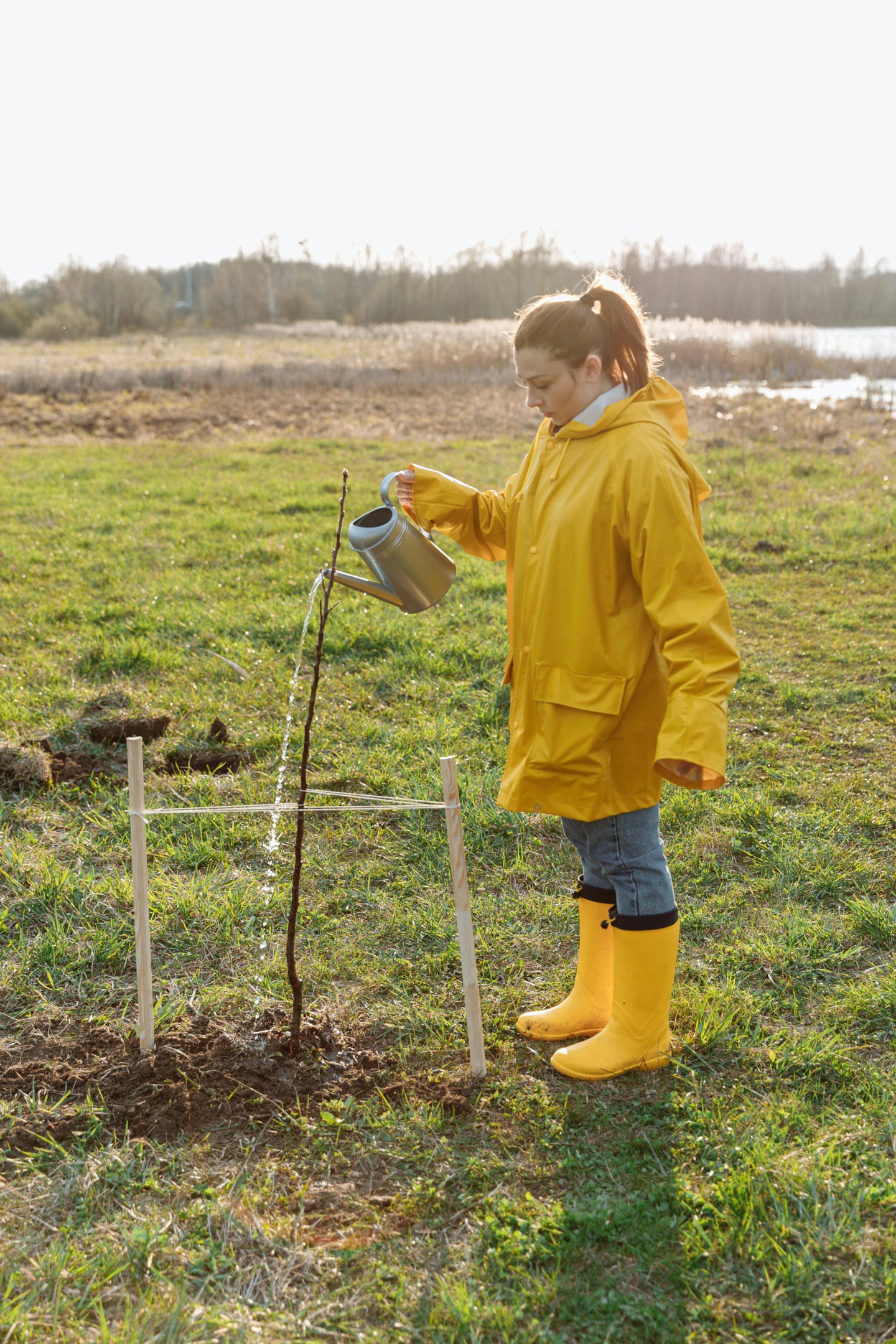
Watering is the most important thing you can do for a newly planted tree. Water provides the moisture needed for root growth and helps the tree establish itself in its new environment. However, it’s easy to overwater or underwater, both of which can be harmful.
How Much Water is Enough?
Newly planted trees need regular watering, especially during the growing season. The best way to check if your tree needs water is to feel the soil. If the top few inches of soil feel dry, it’s time to water. It’s important to water deeply to encourage deep root growth. For the first few months, water the tree every 2-3 days, gradually reducing to once a week during the warmer months.
Avoid Overwatering
Too much water can lead to root rot and disease problems. To avoid this, make sure the soil has good drainage. In heavy, clay-based soils, the water may not drain well, leading to excess moisture around the roots. In sandy soils, water may drain too quickly, leaving the roots too dry. You can use a soaker hose or a garden hose to apply water slowly and evenly, helping the roots stay moist without flooding them.
3. Soil Care: Creating the Perfect Environment
The soil surrounding your newly planted tree plays a vital role in its growth. The right soil will encourage strong root development, while poor soil can stunt growth and create disease problems.
Soil Temperature and Composition
Soil temperature affects how quickly the roots of your newly planted tree establish. Warm, well-drained soil is ideal. Adding organic mulch, such as wood chips, around the base of the tree helps retain moisture and keeps the soil temperature stable. Mulch also prevents weed growth, which competes with the tree for nutrients. Avoid piling mulch directly against the trunk, as this can cause rot or pest infestations.
Soil Compaction and Root Development
Soil compaction can prevent your tree’s roots from spreading freely. It’s important to ensure that the soil around the tree is loose enough to allow for easy root development. If you’ve planted your tree in an area with compacted soil, consider aerating the soil or adding organic matter to improve its structure.
4. Mulching: Helping Your Tree Thrive
Mulch is a fantastic tool for newly planted trees. It helps maintain the right soil moisture levels, reduces weed growth, and protects the tree’s roots from extreme temperatures. A 3-4 inch layer of organic mulch, such as wood chips, around the base of the tree will work wonders.
How Mulch Helps Newly Planted Trees
Mulch helps retain moisture around the root system, preventing the soil from drying out too quickly. It also insulates the soil during both hot and cold weather, maintaining a steady temperature for the roots. Furthermore, mulch prevents grass and weeds from encroaching on the tree’s root zone. Grass and weeds compete for water and nutrients, which can hinder the tree’s development.
Keep Mulch Away from the Trunk
While mulching is beneficial, it’s important to keep mulch a few inches away from the trunk to avoid creating a moist environment that could encourage pests or diseases. Make sure to leave the root flare exposed, which is where the trunk meets the roots, to ensure proper airflow and avoid rot.
5. Corrective Pruning: Removing Broken or Dead Branches
Pruning is an essential part of newly planted trees care. While you don’t want to prune too much in the first year, removing dead or broken branches can help the tree focus its energy on healthy growth. Pruning encourages a strong structure and helps prevent future damage.
How to Prune Your New Tree
In the first year, focus on removing dead or broken branches. Use sharp pruning shears to make clean cuts, which will help the tree heal faster. Avoid excessive pruning as this can stress the tree. A general rule of thumb is to prune no more than 10-20% of the tree’s branches in the first year.
When to Prune
The best time to prune is in the late winter or early spring before the tree begins its growing season. Pruning during this time will help the tree heal quickly and promote new growth. Avoid pruning during the summer or fall, as this can leave the tree vulnerable to pests and diseases.
6. Fertilizing: Giving Your New Tree the Nutrients It Needs
While young trees don’t require a lot of fertilizer in the first year, it can be helpful to provide a light feeding to support their growth. A slow-release, balanced fertilizer with micronutrients will help ensure the tree gets the nutrients it needs for strong root development and healthy growth.
When to Fertilize
It’s best to fertilize your new tree in early spring, just before the growing season begins. Avoid fertilizing too late in the year, as this can promote late-season growth that may not harden off before winter.
Don’t Over-Fertilize
Too much fertilizer can harm a newly planted tree by burning the roots or encouraging weak, spindly growth. Always follow the manufacturer’s instructions for the correct amount of fertilizer to use.
7. Protecting Your Tree from Pests and Disease
Pests and diseases can be a significant threat to young trees, especially during the first year. It’s important to monitor your tree regularly for signs of damage and take action if necessary.
Common Pests to Watch For
Watch for pests like aphids, caterpillars, and spider mites that can damage young trees. Early detection is key to preventing long-term damage. If you notice pests, consult with a professional arborist to determine the best course of action. Organic treatments like insecticidal soap can help control pests without harming the tree.
Disease Prevention
In addition to pests, young trees are susceptible to disease problems like root rot or fungal infections. Proper care, including regular watering and pruning, will help prevent many common diseases. If you notice unusual spots or swelling on the trunk or branches, it’s best to consult with an arborist to prevent the spread of disease.
8. Providing Support: Staking and Protecting Young Trees
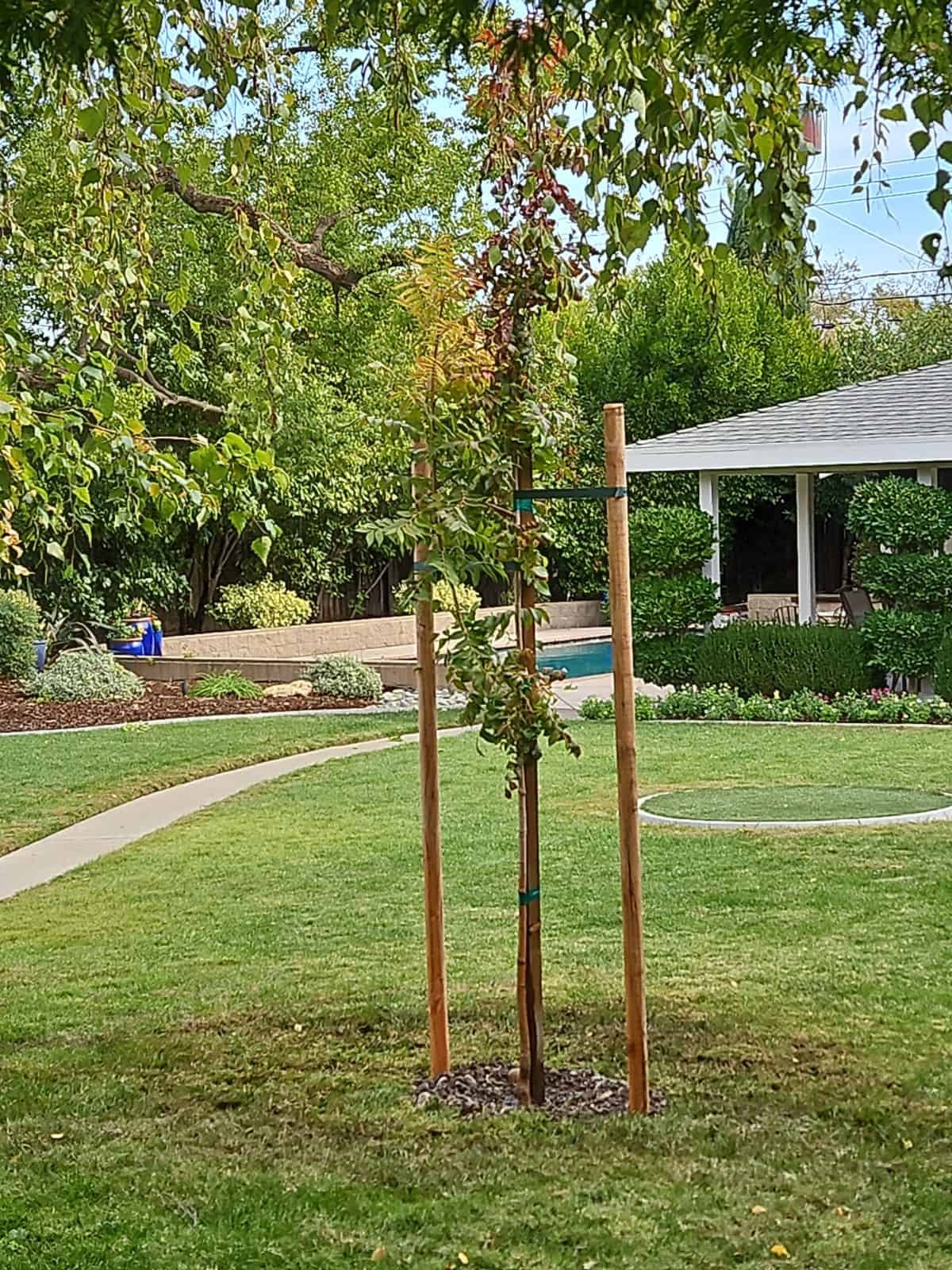
Young trees may need some extra support during their first year to ensure they grow straight and strong. Staking can help prevent wind damage, but it’s important to avoid staking too tightly, as this can damage the trunk and inhibit proper growth.
How to Stake Your New Tree
If staking is necessary, use soft, flexible ties that won’t damage the tree’s trunk. Ensure the tree is allowed to sway slightly, which will help strengthen the trunk and roots. Remove the stakes after one growing season, as mature trees should be able to stand on their own.
9. Keeping Grass and Weeds at Bay
Grass and weeds can compete with newly planted trees for water and nutrients. During the first year, it’s important to keep the area around the tree free from these invaders.
Using String Trimmers and Weed Barriers
Avoid using string trimmers close to the tree, as they can damage the trunk. Instead, hand-pull weeds or use a weed barrier around the base of the tree. Mulch also helps suppress weed growth, reducing the amount of maintenance required.
Conclusion: Ensuring a Healthy Life for Your New Tree
Caring for new trees during their first year is essential for their long-term health and growth. By providing the right amount of water, mulch, and nutrients, and by pruning and protecting the tree from pests, you’re giving it the best chance to thrive. With proper care, your young tree will grow strong, and you’ll enjoy the many benefits of a healthy, beautiful tree for years to come. Remember, the first year is critical—investing in proper care now will set your tree up for success in the future!


